Learning to Love My Body (Without Trying to Control It)

Updated: Jan 22
I’ve been thinking a lot about my body lately.
Not in the way women are taught to or the way I used to— not in mirrors or measurements or before-and-afters — but in memory. In patterns. In the quiet ways I’ve been relating to my body for most of my life without ever fully naming what I was actually doing.
For a long time, movement wasn’t about love.It was about control.
Not control in a shallow or aesthetic sense — but control as safety. Control as a way to feel grounded in a body that had learned early what it felt like to be powerless.
I didn’t have language for that then. I just knew that effort, discipline, and pushing through gave me something solid to hold onto when everything else felt uncertain.
I told myself I wanted to be strong. And I did. But underneath that was something deeper and older: a belief that if I didn’t stay on top of my body — my weight, my food, my effort — something would go wrong.
When Awareness Began
This didn’t start in adulthood.
It didn’t start in motherhood.
It started in childhood.
I was an overweight kid. Sometimes husky, sometimes more than that — but always aware. Always tracking. Always comparing. My body was never neutral to me.
Food wasn’t neutral either.
There was constant noise — what I ate, how much, whether it was “good” or “bad,” whether I should be hungrier or less hungry. I learned early that bodies were noticed, commented on, categorized. That weight meant something.
By the time I was young, I already understood that my body was something to control.
School became the first place where effort translated cleanly into approval. If I worked hard, I was rewarded. If I performed well, I was praised.
But I never actually felt like I belonged.
What I learned instead was that performance could stand in for belonging — that achievement could buy me safety, approval, and temporary acceptance, even if it never fully settled in my body.
That logic made sense to me — and it stuck.
Then Came Sport
Rowing gave that logic structure.
I rowed lightweight.
Which meant every season began with losing weight — getting down to around 145 pounds. It was hard, but achievable if I did everything right: extra cardio, watching everything I ate, constant vigilance — all while being a full-time student athlete while working.
But racing wasn’t about 145.
Racing meant cutting the last five pounds.
Over and over again.
Multiple races each season.
Each time knowing what was coming.
There was one weigh-in day when I had done everything. I finished a long morning of fasted cardio wrapped in saran wrap, layered in sweat clothes, trying to pull every last ounce of water from my body. I was exhausted in that hollow, wired way that felt normal then.
I stepped on the scale.
144 lbs.
Still over.
We left for the course, and I told myself I’d have more time to run when we arrived. But traffic had other plans. Bumper to bumper. Time slipping. The kind of delay that makes your chest tighten because control is suddenly out of reach.
I didn’t know if I was going to make weight.
And it wasn’t just about me. It was about my boat. My team. My coach. The unspoken understanding that my body was part of something larger — and couldn’t be the variable that failed.
So I got out of the car.
On the side of the highway, I ran back and forth.
Cars crawling by.
People staring.Faces turning as they passed, watching me move in soaked clothes, clearly not okay.
I remember feeling exposed in a way that still makes my chest tighten — like I’d crossed some invisible line where dignity no longer mattered. Like I must have looked insane.
And maybe they were right.
I remember noticing how quickly my focus narrowed. How everything nonessential dropped away. How easy it felt to override discomfort — even shame — when the stakes were high enough.
When I finally weighed in, I was barely under the cutoff.
Barely.
Relief flooded in — sharp, immediate — followed by something quieter: the knowledge that this worked. That if I pushed hard enough, my body would comply.
I made weight.
I always did.
And now, years later — with so few memories from that time in my life still intact — this one remains vivid. Clear. Unshakable.
I don’t think that’s accidental.
I think this was one of the moments my body learned what it would take not to let everyone down.
Years later, I would recognize the same pattern — in motherhood, in movement, in the way I learned to push past myself for the sake of something I loved.
When Control Stopped Working
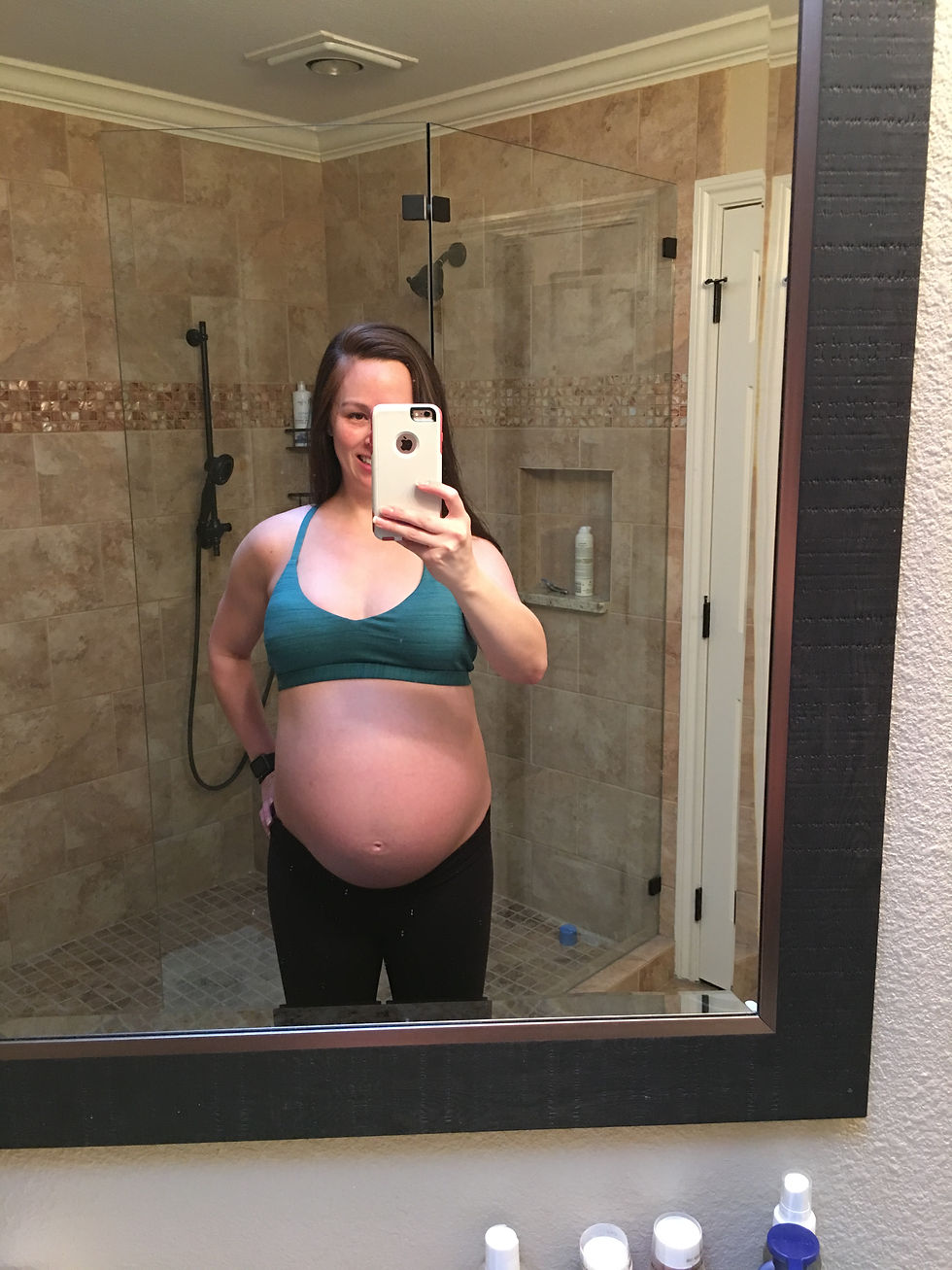
Years later — after kids, after stepping back from extremes, after I thought I had healed — I had two comments on the same day.
One person told me I looked skinny again.Another asked if I was pregnant.
Same body. Same day.
And something in me finally cracked open.
Because I realized I could spend my entire life trying to manage how I was perceived and still never land anywhere stable. I could do everything “right” and still be read however someone else needed to see me.
That was the moment I started doubting my previous, long held beliefs that control could ever deliver peace.
How the Pattern Followed Me
This is how I’ve lived most of my life.
Doing more. Giving more. Pushing myself beyond what was sustainable to meet the needs in front of me — first in school, then in sport, then in work, then in relationships, and eventually in motherhood.
Over the last eight years, that pattern only intensified.
I built a life around showing up. For my family — especially my kids, and even my dogs. For my community. For everyone else.
I rarely, if ever, stopped to consider what I needed.
I didn’t even allow the idea of the oxygen mask theory to enter the picture — not for myself. Intellectually, I understood it. I could see clearly how it benefited others, especially other moms, and I was (and still am) a huge cheerleader for that truth.
But knowing it didn’t mean I could live it.
Even with that understanding, I couldn’t extend the same grace to myself.
All I could see was subtraction.
If I rested, they lost.
If I took time, they lost.
If I chose myself, I was being selfish.
That belief felt unquestionable.
When Something Shifted
It wasn’t until a moment in a doctor’s office a few months ago that something finally shifted — quietly, but unmistakably.
There was no dramatic declaration. No overhaul.
Just a realization that landed in my body before it fully formed in my mind:
This way of living was no longer sustainable.
Since then, I’ve been making progress.
Slowly.
Imperfectly.
Intentionally.
Am I able to live this way consistently yet?
Not always.
But I’m in progress.
Movement, Rewritten
These days, movement looks different.
I still move — because movement matters to me. But it’s no longer a test of worth or endurance. It’s a support system and I view it as a practice. And more importantly, something I genuinely enjoy.
I lift weights so I can carry my kids and my future.
I practice yoga to regulate my nervous system and stay mobile.
I walk and jog to clear my head and to keep up with my kids — sometimes with them, sometimes on my own.
I also rest when I need to.
And I’ll be honest — that part is still hard, like really hard.
Rest triggers something in my body. An urge to be productive. A spike of stress and anxiety tied to the idea of being unproductive, of wasting time. Even when I know, intellectually, that rest is necessary, my body still associates stillness with risk.
That’s something I’m actively working through.
I eat regularly.
I stop when I’m tired.
This isn’t a program.
It’s a relationship.
Eating, Rewritten (Nourishment Without Noise)
My relationship with food has changed too.
Since that doctor’s visit in September, I’ve been practicing intermittent fasting — not as a diet, but as a way of life. I do one longer fast each week (usually 30–40 hours on Mondays) and eat within an eight-twelve hour window the rest of the week. I’m flexible, not strict.
While writing this, I did the math and realized I’ve lost 21 pounds since that appointment.
That number is exciting. I’m only a few pounds away from my pre–first baby weight — a number I haven’t seen in over eight years. A part of me expected a bigger parade or celebration, honestly… but that’s probably a previous version of me speaking.
What’s more exciting than the number is this:
I feel healthy.
My body moves well.
That feels new.
What’s surprised me most isn’t the weight loss, though. It’s how quiet my mind has become around food.
For most of my life, food lived in my head constantly — like a record playing 24/7 in the background, and often in the foreground.
What I’d eat next.
What I shouldn’t eat.
Whether I’d already eaten too much or not enough.
That noise is mostly gone now.
I rarely think about food the way I used to. Maybe once or twice a day — sometimes a few more times during my longer fasts (because, yes, my brain still likes to check in). But it no longer runs the show.
Eating this way has helped me feel more in tune with my body. Fewer decisions to make. More space to notice actual hunger, fullness, and satisfaction.
For me, that quiet has been deeply healing.
And when I step back and look at the bigger picture — a body that feels strong, supported, and capable of carrying the life I’m building — I can’t help but think:
What more could I ask for?
What I Hope My Kids Learn
I want my kids to grow up watching a mother who doesn’t treat her body like a problem to solve.
I want them to see strength that includes rest.
Care that includes self.
Love that doesn’t require self-erasure.
I want them to know that worth isn’t something you earn through discipline, and that bodies are meant to live, change, and be listened to.
Where I’m Landing (For Now)
Do I have the body I had before kids? No.
Do I have the body I once tried to force myself into? Nope.
Can I deadlift over 300 pounds? Definitely not.
But I have something that feels rarer now:
Trust.
Awareness.
Enough.
And for the first time, I believe that investing in myself doesn’t take away from the people I love — it makes the life I love sustainable.
-Kelly
January 20, 2026
Comments